
 Volkswagen
 BMW
BMW MINI
MINI Mercedes
 Ford
Ford Peugeot
 Citroën
 Opel
OpelHow to choose the right camshaft for your build
How do you choose the right camshaft? Use, power goals, turbo or naturally aspirated, fuel and gearing - everything that decides which cam suits your build.
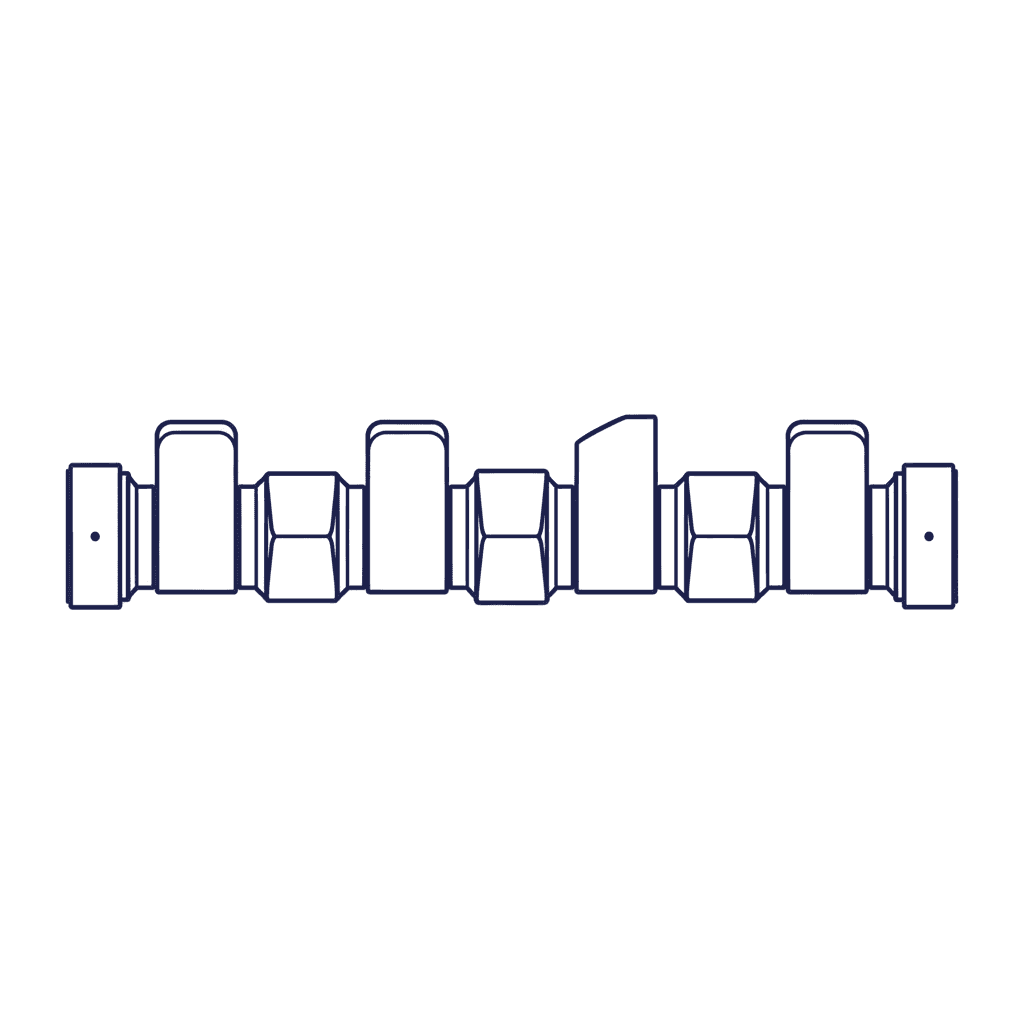
Not all cams are created equal. Choosing the wrong camshaft can actually reduce your engine's power instead of increasing it. This is one of the most common questions we get at Meksta, and the answer is never simple - but it can be broken down into a number of key factors.
A cam swap can give you:
- Increased torque
- Better power at higher RPM
- Higher peak power
- Smoother idle
- Better fuel efficiency
But it is not as simple as swapping the camshaft and driving faster. The result depends on your specific engine, your goals and how the vehicle will be used.
Use case - the most important question
How will the car be used? The answer gives a clear picture of the engine's operating range. A hard-driven street car still needs strong mid-range to pull through the gears, while a drag racing car can run with a narrower power band high up in the rev range. If it is a daily driver, idle quality and throttle response from low revs matter a great deal.
The use case therefore governs the camshaft's “size” - how aggressive the profile needs to be.
Power goals
In the same way as the use case, the power goal helps determine the camshaft's specifications. It helps us narrow down the options based on the specific application.
An interesting detail: a 2-litre turbo engine making 300 hp and a 3-litre turbo engine making 1,700 hp have very different needs, but a 2-litre naturally aspirated engine making 300 hp and that 1,700 hp engine can actually end up with a similar camshaft profile.
Rev range and power curve
We ask this question to determine the camshaft's duration. Shorter duration suits lower RPM, longer duration suits higher RPM.
Do you need a narrow operating range with high torque, for example for a jet boat, or a broader torque band for smoother power delivery in a class with limited traction? This also affects the choice of lifters and valve springs.
Turbo or naturally aspirated?
If the engine runs with a turbo (or a supercharger), we need to know that. The size of the turbo affects the power band and the torque curve. Matching the camshaft profiles to the turbo's characteristics is crucial for good results.
Fuel type
Fuel affects more than you would think. Switching from petrol to, for example, methanol physically increases the amount of fuel in the intake charge. In some cases the camshaft timing needs to be adjusted to compensate for this. The fuel type also helps us assess the engine's overall power potential.
Other engine specifications
Stroke length, cylinder head work, intake and exhaust - the whole package matters. A long-stroke engine can have a limiting piston speed that puts a ceiling on RPM. A completely stock engine, from the air filter to the silencer, can actually lose performance from too aggressive a cam.
Transmission and gearing
A heavy car with tall gearing may need a slightly shorter duration and a tighter lobe separation angle to maximise torque. A light car with close gearing can instead benefit from a narrower power band with more peak power at the expense of the mid-range.
The transmission also affects the valve train. A sequential gearbox with hard shifts places higher demands on the valve springs to handle the sudden unloading.
Summary
There is no universal solution. The right camshaft depends on the whole package: use case, power goals, rev range, induction, fuel, engine specification and transmission. When we at Meksta have this information, we can help you choose the camshaft and the valve train components that will give the best result for your specific build.
Contact Meksta and we will help you find the right camshaft.
Flat tappet vs roller lifters →
About the author
Robert Wiklund has worked with engines for over 30 years, including for Mazda Rally Team Europe, Toyota Team Europe and GM's rally programme. He founded Meksta in 2023.
Read more about Meksta →Does your engine need reconditioning or tuning?
Contact us for expert advice, whether it is a crankshaft, a turbo upgrade or cylinder boring.