
Cylinder head pressure testing
Find cracks and leaks before they turn into expensive problems. Pressure testing reveals hidden damage that is invisible to the naked eye - an essential first step in reconditioning.
What is pressure testing?
Pressure testing is a proven method for identifying cracks and leaks in cylinder heads. The method works by sealing the head and putting it under pressure - any cracks show up through a pressure drop or through visible bubbles in liquid.
Cracks in cylinder heads are more common than many people think. Overheating, thermal stress and material fatigue can cause cracks that are invisible to a visual inspection. Without pressure testing you risk reconditioning a head that really should be replaced - or fitting a damaged head that causes new problems.
How does the pressure test work?
The process is systematic and thorough. Every step is aimed at giving a reliable result you can base your decision on.
Preparation
The cylinder head is cleaned and all openings (water and oil galleries) are sealed with special seals and plugs.
Pressurising
The head is filled with compressed air or liquid up to a specified pressure matched to the material and design.
Inspection
Under pressure the head is inspected. Bubbles, moisture or a pressure drop indicate that a leak is present.
Assessment
We document the result and give you an honest assessment: is the head worth reconditioning, or should it be replaced?
When should you pressure test?
Pressure testing is relevant in several situations, not just when there is an obvious problem:
During reconditioning
Always the first step in a cylinder head recondition. There is no point cutting valve seats in a cracked head.
After overheating
If the engine has overheated there is a high risk of thermal cracks, which can cause sudden problems over time even though it seems to run fine right now.
Signs of a crack
Often leads to water in the oil, white exhaust smoke, coolant loss with no visible leak, or bubbles in the expansion tank.
Second-hand cylinder head
Buying a second-hand cylinder head? Pressure test it before fitting so you avoid nasty surprises and doing the job twice.
Cracks you cannot see
Many cracks are microscopic and sit inside coolant channels or between valve seats. They aren't visible on visual inspection and can be impossible to detect without pressure testing. Yet they can cause coolant mixing into the oil, loss of compression or overheating. Pressure testing is the only reliable method to rule out this kind of hidden damage.
What does pressure testing cost?
Pressure testing a smaller four-cylinder cylinder head costs 1,876 SEK excl. VAT. Larger cylinder heads, for example diesel and industrial engines, cost from 2,800 SEK. The price depends on the number of cylinders and the size of the head.
| Service | Price |
| Pressure testing cylinder head, 1 cyl | 1 106 kr |
| Pressure testing cylinder head, 4 cyl | 1 876 kr |
| Pressure testing cylinder head, 6 cyl | 2 436 kr |
| Pressure testing cylinder head, 8 cyl | 2 996 kr |
| Pressure testing large cylinder head, 4 cyl | 2 800 kr |
All prices excl. VAT. See the full price list
How it works
You always know what needs doing before we start. A detailed report after every pressure test.
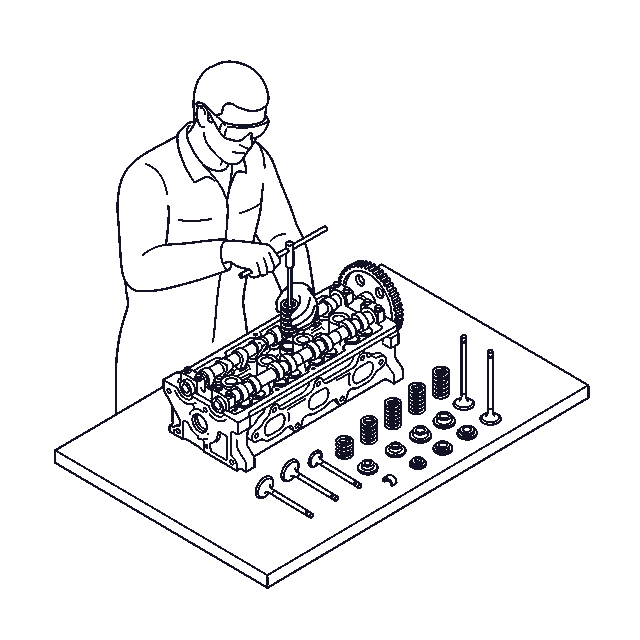
Get in touch
Call or send a quote request. Describe the symptoms and engine type and we will give you an initial assessment.
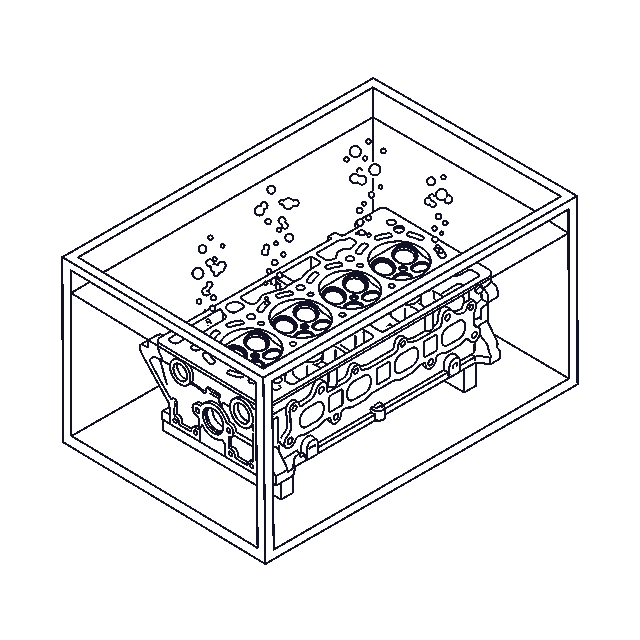
Send-in
You drop the cylinder head off at our workshop, or send it in by post.
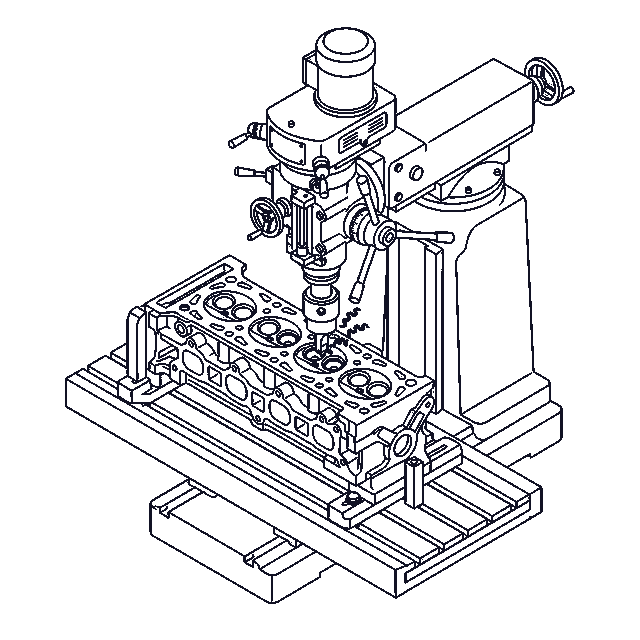
Pressure testing
We seal, pressurise and inspect the cylinder head systematically.
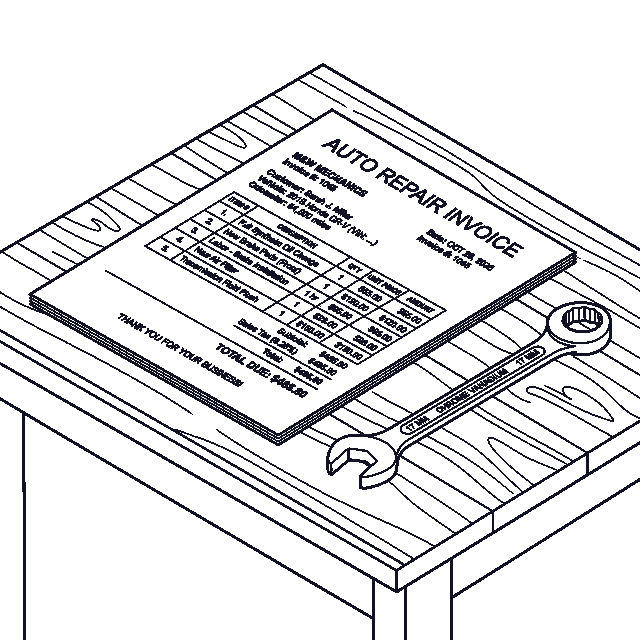
Report and recommendation
You get the result with an honest assessment: worth reconditioning or better replaced. If reconditioning is recommended, we give you a detailed quote for the cylinder head recondition.
Get in touch
Call or send a quote request. Describe the symptoms and engine type and we will give you an initial assessment.
Send-in
You drop the cylinder head off at our workshop, or send it in by post.
Pressure testing
We seal, pressurise and inspect the cylinder head systematically.
Report and recommendation
You get the result with an honest assessment: worth reconditioning or better replaced. If reconditioning is recommended, we give you a detailed quote for the cylinder head recondition.
Frequently asked questions about pressure testing
Suspect a crack in your cylinder head?
Book a pressure test and get answers fast. We give you an honest assessment and recommendation.
Common engines we recondition
See what a reconditioning means for your specific engine - prices, common faults and specifications per engine family.