
 Volkswagen
 BMW
BMW MINI
MINI Mercedes
 Ford
Ford Peugeot
 Citroën
 Opel
OpelBreaking in a flat tappet camshaft
The first 20 minutes decide the camshaft's lifespan. Here's how to break in a flat tappet cam correctly - preparation, lubrication, rpm and common mistakes.
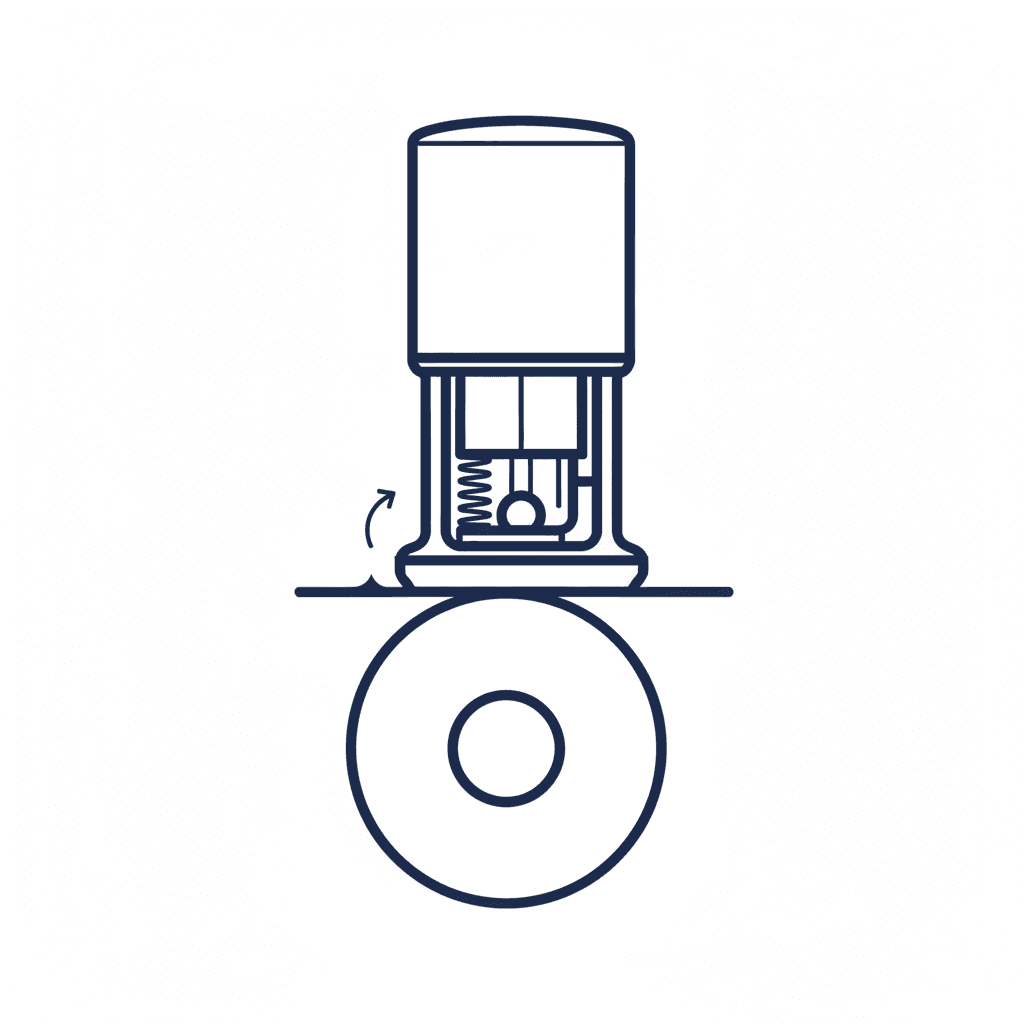
The first 20 minutes after start-up are absolutely critical for both hydraulic and mechanical flat tappet camshafts. It is during this period that the underside of each lifter mates with its cam lobe. Get this wrong and you risk destroying a new camshaft before it has even had the chance to show what it can do.
Before you start
Check that the camshaft and all the valve train components are compatible, especially the valve springs. For applications with heavy springs, we recommend using lighter springs during break-in, or removing the inner spring (on dual-spring setups) just for the break-in period.
Never assume parts arrive clean. Always check camshaft bolts, spring retainers, springs and other parts for damage before installation.
Preparation
Change the oil and filter before installation. Fill the crankcase with fresh, clean engine oil. Many modern oils lack sufficient additives for breaking in flat tappet camshafts - choose an oil with a high zinc content (ZDDP) or use a separate break-in oil additive.
Wash the camshaft and lifters thoroughly in clean mineral spirits to remove the rust preventative applied before shipping.
Installation
Do not pump up hydraulic lifters before installation. This can cause a valve to be held open during cranking, which gives low compression and a delayed start - extremely harmful for the break-in.
Apply the supplied moly paste to the underside of the lifters, the cam lobes and the distributor gear. Then set the valve lash or the lifter preload. Minimise the number of turns you rotate the engine, since this can displace the paste from the lobes.
If possible, try to pre-oil the system before start-up. Rotate the engine at least one full turn to make sure oil reaches all the valve train components. The valve covers should be off so you can see that every rocker arm is getting oil.
First start and break-in
- Set the ignition timing for a fast idle before start-up. The engine must start quickly without unnecessary cranking.
- Start the engine and immediately bring it up to 2,500 rpm.
- Vary the RPM between 1,500-3,000 rpm in a slow acceleration/deceleration pattern.
- While doing this, check for leaks and unusual noises. If something does not sound right, shut off the engine and investigate the cause.
- Continue the varying break-in for a total of 20-30 minutes. This is necessary for correct lifter rotation so that each lifter mates with its own lobe.
If the engine needs to be shut off for any reason, go straight back to 3,000 rpm on restart and continue the break-in until the total running time reaches 20-30 minutes.
After break-in
Let the engine cool, drain the oil and change the oil filter. Fill it with premium oil. The initial break-in is now complete. Drive the car normally, but change the oil and filter again after 1,000 km.
Important to know
- Never use used lifters on a new camshaft. Lifters and cam lobes are mated together during break-in (for engines with higher demands, DLC-coated lifters are also available as an alternative). If lifters are removed from the engine, they must go back onto the same lobe.
- Spring pressure: Do not exceed the recommended open pressure. Racing applications often run higher pressure at the expense of the camshaft's lifespan.
- Lifter rotation: Flat tappet cam lobes are ground with a slight taper that makes the lifter rotate. This rotation draws oil to the contact surface. Check that the pushrods are spinning during break-in as a sign that the lifters are rotating correctly.
Meksta recommends always buying the camshaft and lifters as a matched set to minimise the risk of failure during break-in.
About the author
Robert Wiklund has worked with engines for over 30 years, including for Mazda Rally Team Europe, Toyota Team Europe and GM's rally programme. He founded Meksta in 2023.
Read more about Meksta →Does your engine need reconditioning or tuning?
Contact us for expert advice, whether it is a crankshaft, a turbo upgrade or cylinder boring.