
 Volkswagen
 BMW
BMW MINI
MINI Mercedes
 Ford
Ford Peugeot
 Citroën
 Opel
OpelCamshaft material: cast iron vs steel
Cast iron, billet steel, nitriding and phosphating - the materials behind the camshaft and why they matter for wear and performance. A guide from Meksta.
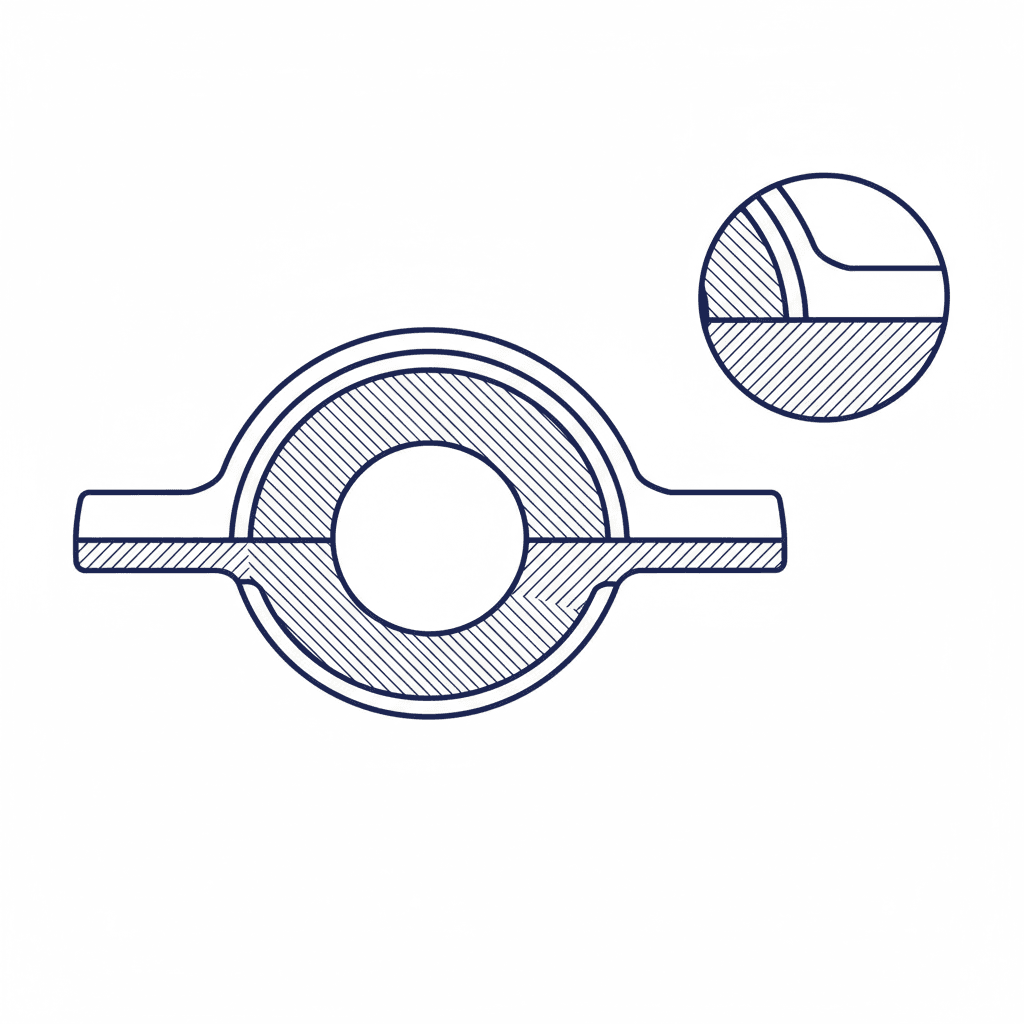
The camshaft's material determines how much load the lobe surface can take, how long it lasts and what type of lifter it can be run with. The choice between cast iron and steel - and which surface treatment is used - is not about prestige, it is about mechanics.
Cast iron: the most common camshaft core
Most camshafts - both OEM and aftermarket - are made from alloyed cast iron. Newman Cams, one of the UK's most established camshaft manufacturers, specifies that the standard material for cast camshafts is a chromium-alloyed cast iron, often referred to as "chilled cast iron" or Grade 17, with typically 1% chromium.
"Chilled" refers to the manufacturing process: the lobes are cast against chilled moulds, which make the surface solidify quickly and form a hard, white iron structure in the lobe surface, while the core stays as tougher grey cast iron. The result is an extremely hard contact surface that withstands the sliding load from a flat tappet lifter.
COMP Cams produces both cast and billet cores and notes that their cast camshafts work excellently with flat tappet lifters, provided break-in and lubrication are handled correctly.
Billet steel: machined precision
A billet camshaft is turned from a solid steel bar, unlike cast iron which is cast in a mould. Newman Cams describes billet as the preferred material for performance camshafts and states that their billet blanks are normally nitrided after grinding.
Common steel grades for billet camshafts include 5150 (chrome-vanadium), 8620 (nickel-chrome-molybdenum) and 9310, all alloy steels with high fatigue strength. CylinderHead MFG notes that billet delivers superior strength, the ability to hold tighter tolerances, and better resistance to bending and twisting under high loads.
The downside is cost. Turning, grinding and nitriding a camshaft from a solid bar costs considerably more than casting one.
EN40B - the nitriding steel
Newman Cams highlights EN40B as a specific steel designed for nitriding. It contains aluminium, chromium and molybdenum, which all form hard nitrides during heat treatment. The result is an extremely hard surface (typically 65-70 HRC) that withstands high contact loads, ideal for camshafts run with roller lifters and high spring pressures.
Surface treatments
Phosphating (Parkerizing)
OnAllCylinders describes Parco Lubrite (manganese dithiophosphate) as the standard treatment for cast-iron camshafts for decades. The phosphating creates a porous, oil-absorbing surface that holds a lubricating film during the critical break-in phase. The dark, matt surface you see on a new camshaft is the phosphating - it is not cosmetic, it is functional.
Nitriding
During nitriding, the camshaft is heat-treated in a nitrogen atmosphere. Nitrogen atoms diffuse into the surface of the steel and form extremely hard nitrides. OnAllCylinders describes it as a process that case-hardens the camshaft core, giving a wear surface considerably harder than untreated steel.
Nitriding is standard on billet camshafts and is also used on reground camshafts where the original surface hardening has been ground away and needs to be replaced.
DLC (Diamond-Like Carbon)
DLC is a thin, extremely hard carbon-based coating applied to the lifter's contact surface (and sometimes to the cam lobe). OnAllCylinders notes that DLC surfaces are very slick and wear-resistant - NASCAR teams used DLC-coated lifters with steel-core camshafts during the era when the rules required flat tappet.
CatCams in Belgium has developed its own "slipper followers" - flat followers with a DLC coating and an extra-long contact surface - specifically to allow more aggressive cam profiles that conventional roller finger followers cannot handle.
Micro-finishing
In addition to phosphating, some manufacturers use micro-finishing on the cam journals and lobe contact surfaces. The process gives an extremely smooth surface that reduces initial friction and improves the stability of the oil film. It is more common on performance camshafts than on standard replacement parts.
Blanks and camshaft grinding
Meksta grinds camshafts from blanks - in other words camshaft cores that already have the correct basic shape, journal diameters and mounting dimensions, but are still missing their final lobe profiles. By grinding the desired profile onto a blank, any cam specification can be created without having to cast a new mould.
This is the standard process for aftermarket camshafts worldwide - manufacturers such as COMP Cams, Newman Cams and ENEM all use grinding as their primary manufacturing method. The quality lies in the precision of the grinding machine, the accuracy of the program and the base properties of the material.
Material and lifter type go together
The choice of material and surface treatment is not made in isolation, it has to match the lifter type:
- Flat tappet, cast-iron cam - requires phosphating, correct hardening in the lobe surface and ZDDP-rich oil. The sliding contact relies on the sacrificial film between the lobe and the lifter.
- Flat tappet, billet steel - requires nitriding to give sufficient surface hardness. Without nitriding, untreated steel is too soft for the sliding load.
- Roller lifters - the rolling contact allows harder materials and higher spring pressures. Nitrided billet steel is the standard choice for aggressive roller cams.
Summary
The material is not a detail you can see, but it is a detail that determines the camshaft's lifespan. Cast iron with correct hardening works excellently with flat tappet and the right oil. Billet steel with nitriding gives maximum wear resistance for high loads. And the surface treatment - whether phosphating, nitriding or DLC - is what actually protects the lobe against the thousands of contacts per minute the camshaft is exposed to.
Contact Meksta - we know which materials and processes give the right result for your build.
About the author
Robert Wiklund has worked with engines for over 30 years, including for Mazda Rally Team Europe, Toyota Team Europe and GM's rally programme. He founded Meksta in 2023.
Read more about Meksta →Does your engine need reconditioning or tuning?
Contact us for expert advice, whether it is a crankshaft, a turbo upgrade or cylinder boring.