
 Volkswagen
 BMW
BMW MINI
MINI Mercedes
 Ford
Ford Peugeot
 Citroën
 Opel
OpelDegreeing the camshaft - step by step
Step by step: how to degree in the camshaft using a degree wheel, dial indicator and piston stop. Find TDC, measure valve events and set the centreline. A guide from Meksta.
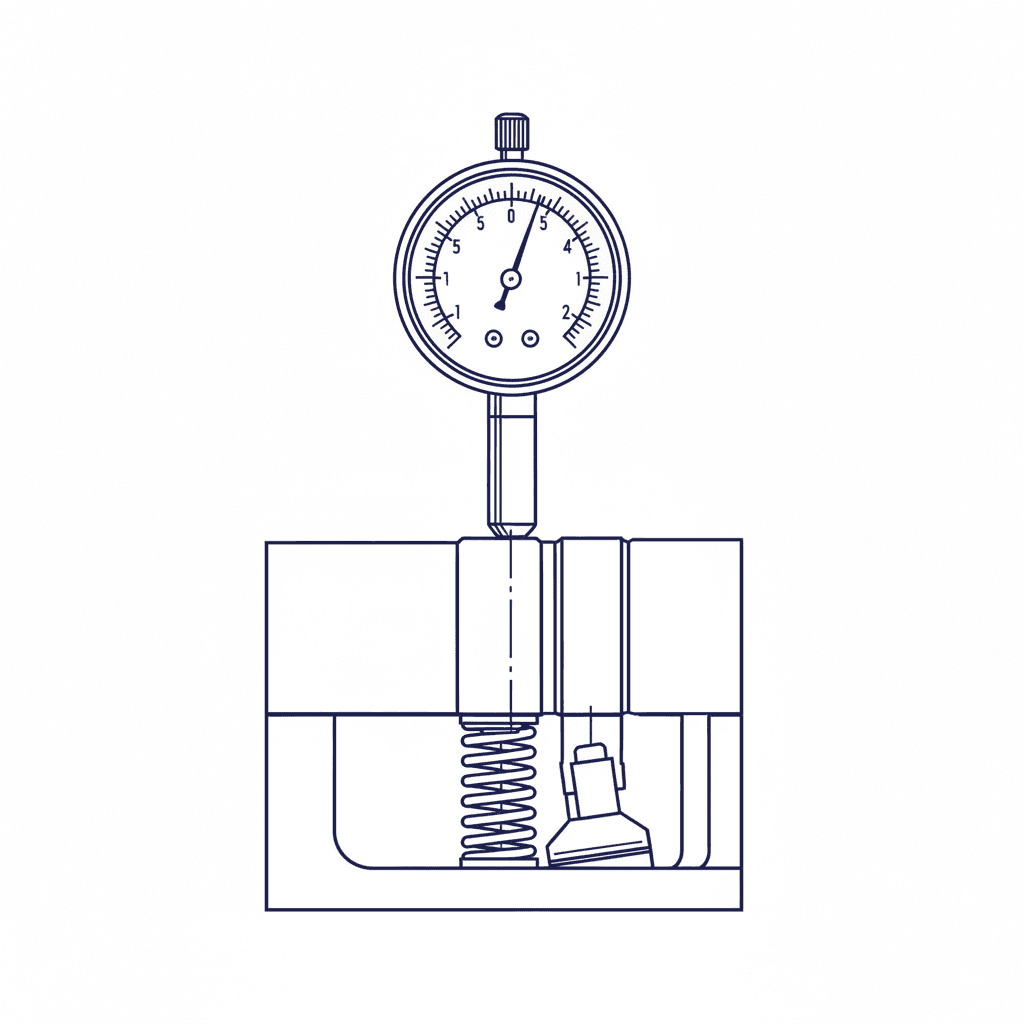
Degreeing in the camshaft is about more than turning a couple of adjustable cam gears. The process makes sure the camshaft's centreline is in the correct position relative to the crankshaft for your specific engine.
What you need
- Degree wheel - Mounted on the crankshaft nose. A larger diameter gives higher reading accuracy.
- Dial indicator with a stand - The stand must be able to be fixed firmly to the cylinder head. The tip should be parallel with the valve stem for correct readings.
- Piston stop - Needed to find exact top dead centre (TDC) with the degree wheel.
- Pointer - A simple coat hanger or welding wire fixed to the block, pointing at the degree wheel's scale markings.
- Cam card - Comes with every camshaft and lists all the specifications: duration, lift, lobe centreline, lobe separation (LSA) and more.
Step 1: Find top dead centre
Mount the degree wheel on the crankshaft nose and the pointer against the block. Screw the piston stop into the cylinder. Rotate the crankshaft clockwise until the piston touches the stop - note the degree reading. Then rotate it anticlockwise until the piston touches the stop again - note that degree reading too.
Exact TDC lies exactly halfway between the two readings. Adjust the degree wheel or the pointer so it points to 0° when the piston is at TDC.
Step 2: Prepare the dial indicator
Mount the dial indicator so the tip rests directly on the spring retainer (not the rocker arm). It is essential that the indicator's tip is parallel with the valve - that is the only way to get a correct reading.
When degreeing, the valve lash should be fully closed - always measure from the top of the retainer.
Step 3: Measure the valve events
Rotate the crankshaft slowly clockwise and note the degree readings at which the valve opens and closes - this should match your cam card. Common reference points are 1 mm lift (or 0.050") for the opening and closing points.
Step 4: Calculate the centreline
With the opening and closing degree readings, you can calculate the cam lobe's centreline. Compare it with the specification on the cam card. If it deviates, the cam gear needs adjusting.
Step 5: Adjust
With adjustable cam gears, you can rotate the camshaft forward (advance) or backward (retard) relative to the crankshaft until the centreline matches. Repeat the measurement after every adjustment to confirm it.
Tips
- Most turbo and highly tuned naturally aspirated engines respond positively to small overlap adjustments even after correct degreeing. But degreeing in gives you the stable baseline that makes further tuning worthwhile. Read also why degreeing is necessary.
- If the cylinder head or the block has been deck milled, the cam timing shifts. Degreeing in compensates for this.
- Document all your readings. They are valuable reference points if you need to troubleshoot later.
Need help degreeing in your camshaft or have questions about your cam specifications? Contact Meksta.
About the author
Robert Wiklund has worked with engines for over 30 years, including for Mazda Rally Team Europe, Toyota Team Europe and GM's rally programme. He founded Meksta in 2023.
Read more about Meksta →Does your engine need reconditioning or tuning?
Contact us for expert advice, whether it is a crankshaft, a turbo upgrade or cylinder boring.