
Crankshaft balancing
Dynamic balancing of the crankshaft, flywheel and clutch for every engine type, from four-cylinder inline engines to V8 and V12. Less vibration, longer service life and smoother running. With our own machine shop and 30+ years of experience.
What is crankshaft balancing?
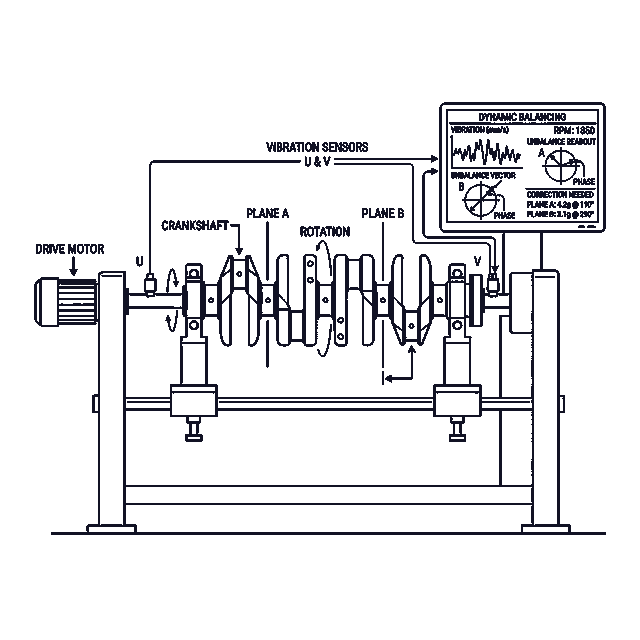
Crankshaft balancing means the crankshaft is mounted in a balancing machine that measures where the imbalance is and how large it is. By removing or adding material the shaft is given an even mass distribution, so that it rotates without harmful vibration even at high revs. Static balancing is not enough for modern engines. It is dynamic balancing that reflects how the shaft actually works.
Why balance the crankshaft?
An unbalanced crankshaft creates vibration that increases with engine speed. At high revs this vibration can damage the main bearings, seals and even the engine block. A well-balanced crankshaft gives several concrete benefits:
- Less vibration and smoother running
- Longer life for main bearings and seals
- Lower risk of engine failure at high revs
- Better revving and response
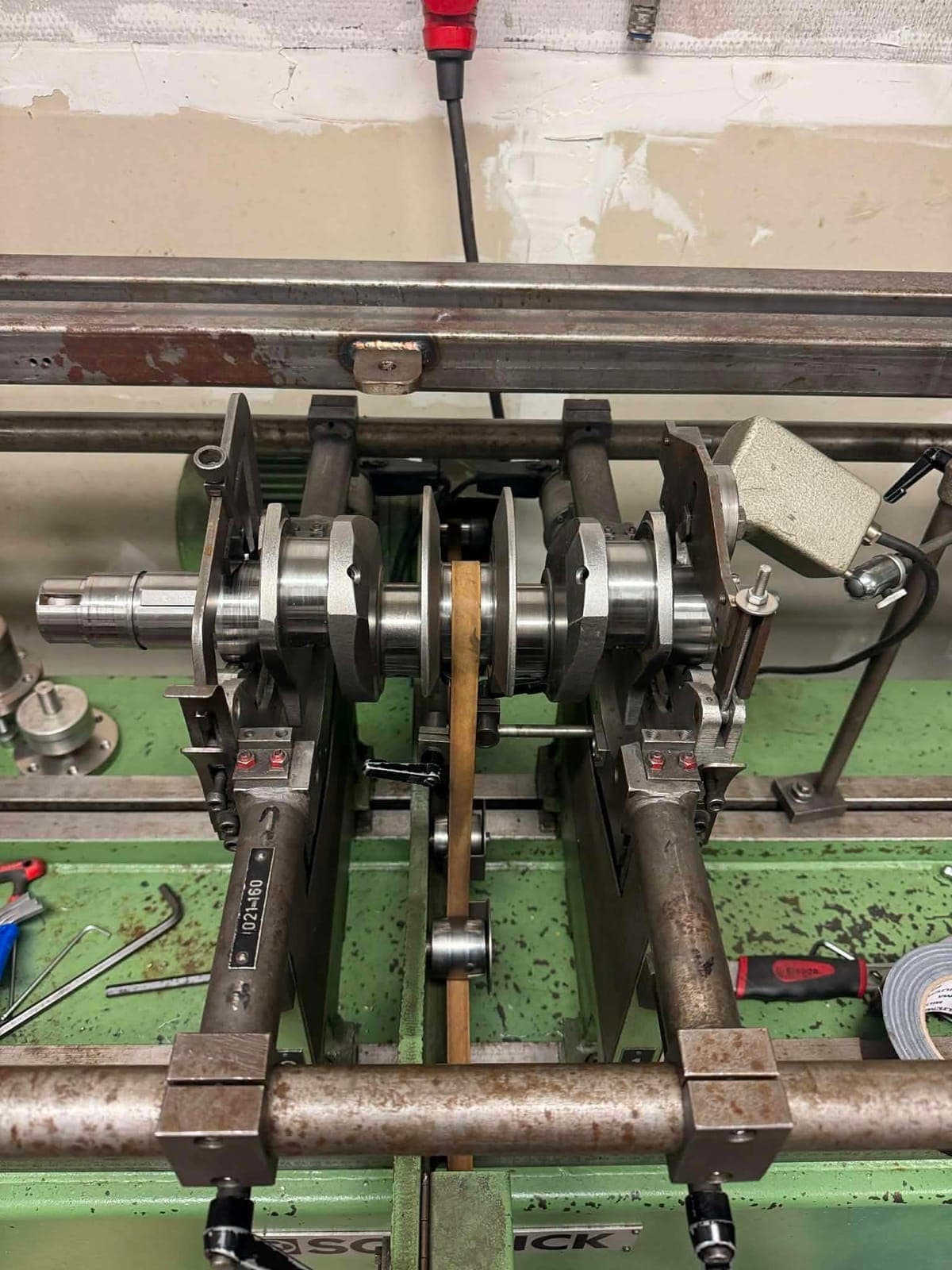
Dynamic crankshaft balancing
When balancing multi-cylinder engines we work with a balance factor. That means we weigh everything that sits on the crank pin, that is the pistons, connecting rods and bearings, and fit matching weight in the form of bob weights on the crankshaft before balancing takes place. That way the machine reflects the actual mass the shaft rotates with in the engine.
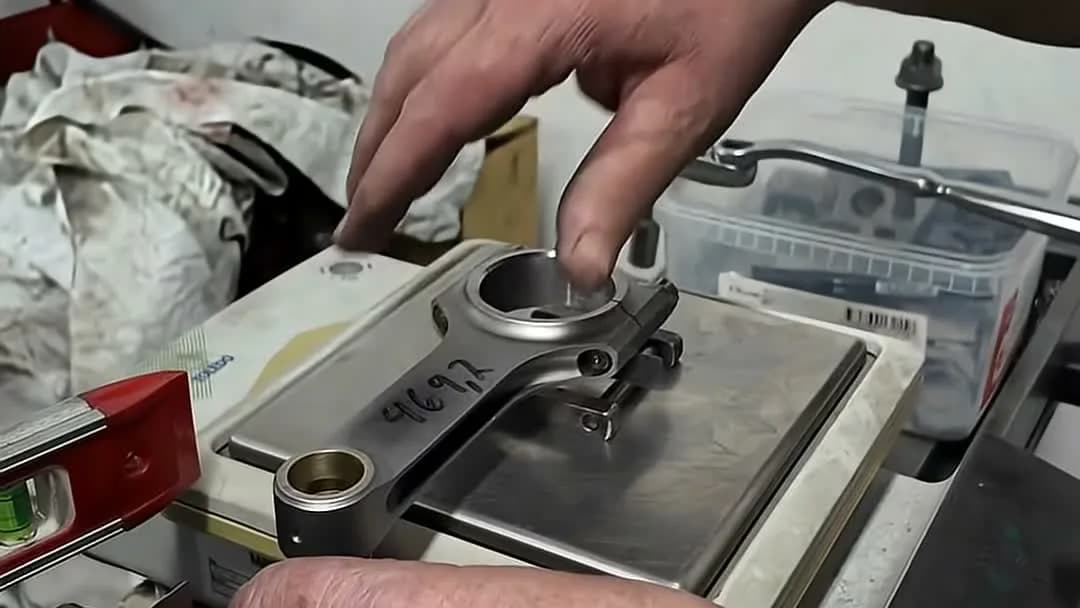
Pistons and connecting rods are weight-matched on a calibrated scale so that every cylinder weighs the same. This is decisive. The big end of the connecting rod is part of the rotating motion, so if the weights differ between cylinders, balancing the crankshaft alone is pointless. Once the mass is evened out we drill or mill material away at the heavy spots, or add heavy metal where needed.
We balance in a Schenck balancing machine, a German machine that measures the imbalance in two planes at once. That gives an accurate and repeatable result that holds even when the engine is revved hard. The machine is part of our machine shop.
Internal balancing or external balancing
With internal balancing the crankshaft is balanced on its own, using counterweights on the shaft itself. With external balancing we balance the crankshaft, flywheel, pulley and clutch or flexplate as a complete assembly. Which method applies depends on how the engine is designed. We balance to what your engine is built for, so the result holds true when everything is assembled again.
When does the crankshaft need balancing?
- On a fresh build and a complete engine rebuild
- After fitting pistons or connecting rods of a different weight
- On stroker builds where the crankshaft has been changed
- After grinding the crankshaft
- When vibration increases with engine speed
- On V8 and other engines with many cylinders
What does crankshaft balancing cost?
Balancing the rotating assembly on an inline four-cylinder engine costs 3 742 kr excl. VAT and includes the crankshaft, pulleys, flywheel and clutch. For V engines the weight-matching of pistons and connecting rods is also included. The prices below are for complete balancing jobs. You always get a clear quote after inspection.
| Service | Description | Price (excl. VAT) |
|---|---|---|
| Rotating assembly balancing, inline 4-cyl | Crankshaft, pulleys, flywheel and clutch. | 3 742 kr |
| Rotating assembly balancing, inline 5-cyl | Crankshaft, pulleys, flywheel and clutch. | 4 066 kr |
| Rotating assembly balancing, inline 6-cyl | Crankshaft, pulleys, flywheel and clutch. | 4 374 kr |
| Rotating assembly balancing, V6 | Incl. weight-matching of pistons and connecting rods, pulleys, harmonic damper, flywheel and clutch or flexplate. | 8 526 kr |
| Rotating assembly balancing, V8 | Incl. weight-matching of pistons and connecting rods, pulleys, harmonic damper, flywheel and clutch or flexplate. | from 9 114 kr |
| Flywheel balancing | Separate balancing of the flywheel. | 2 100 kr |
| Balancing flywheel + clutch | Flywheel with pressure plate and clutch. | 2 842 kr |
| Weight-matching of pistons and connecting rods (inline engine) | Weighing and weight-matching on a calibrated scale. Included in the price for V engines. | 2 408 kr |
| Heavy metal, fitting | Fitting of heavy metal in the crankshaft, per piece. | 650 kr/st |
All prices excl. VAT. Exact price is given after inspection. See the full price list
Crankshaft grinding and balancing go together
Balancing is often done together with grinding the crankshaft, since grinding changes the mass distribution and new pistons or connecting rods change the weight. Does the crankshaft also need grinding or polishing? Read more about crankshaft grinding.
How we work - from inspection to balanced crankshaft
A proven process from crack check to fully balanced crankshaft.
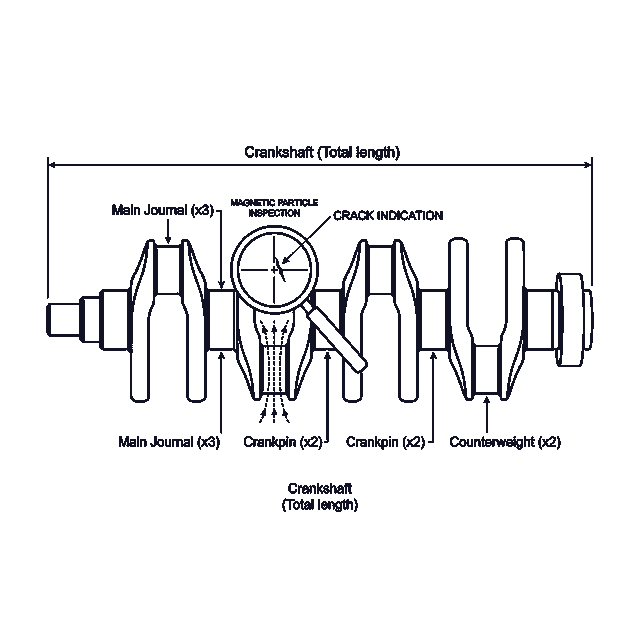
Crack check & cleaning
The crankshaft is cleaned and checked for cracks by magnetic particle inspection before balancing. A cracked shaft cannot be balanced and must be replaced.
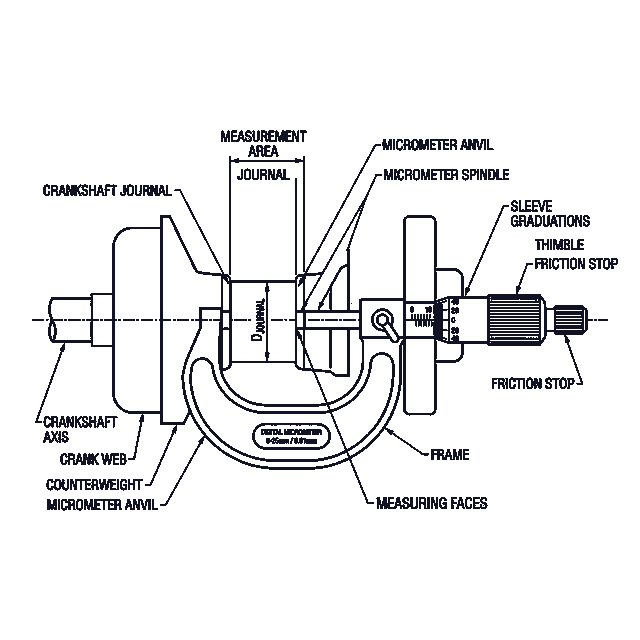
Weight-matching of pistons & connecting rods
Pistons and connecting rods are weighed and matched on a calibrated scale so that every cylinder has the same rotating and reciprocating mass. That is a precondition for a correct result.
Dynamic balancing
The crankshaft is fitted with bob weights in the balancing machine, which measures where the imbalance is and how large it is. Material is drilled or milled away at the heavy spots.
Verification run & report
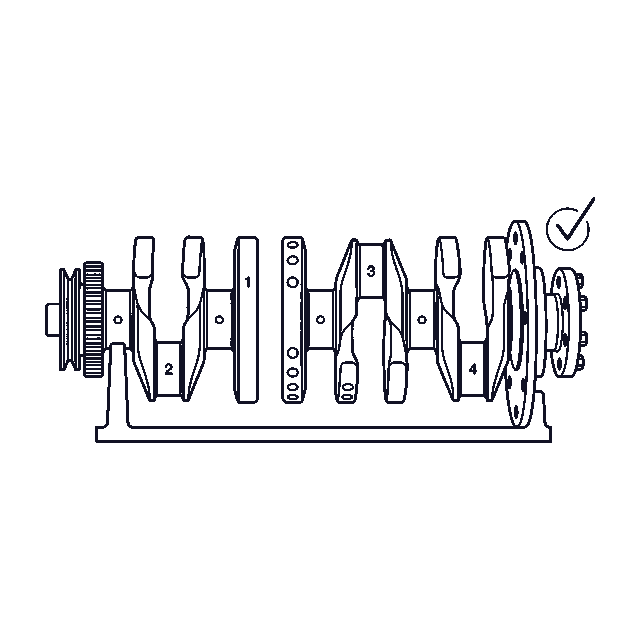
The shaft is run again after adjustment to verify that the imbalance is within tolerance. You get a result you can rely on when the engine is revved.
Crack check & cleaning
The crankshaft is cleaned and checked for cracks by magnetic particle inspection before balancing. A cracked shaft cannot be balanced and must be replaced.
Weight-matching of pistons & connecting rods
Pistons and connecting rods are weighed and matched on a calibrated scale so that every cylinder has the same rotating and reciprocating mass. That is a precondition for a correct result.
Dynamic balancing
The crankshaft is fitted with bob weights in the balancing machine, which measures where the imbalance is and how large it is. Material is drilled or milled away at the heavy spots.
Verification run & report
The shaft is run again after adjustment to verify that the imbalance is within tolerance. You get a result you can rely on when the engine is revved.
Frequently asked questions about crankshaft balancing
Do you need to balance a crankshaft?
Send your crankshaft in for measuring and assessment. We will come back within 24 hours. Quote after inspection.
Common engines we recondition
See what a reconditioning means for your specific engine - prices, common faults and specifications per engine family.